- by elliot-windham
- December 23, 2025
The Future of Driving: Latest Automobile Technology and Trends
- by alex reynolds,
- December 4, 2025
- Reading Time: 5-6 mins
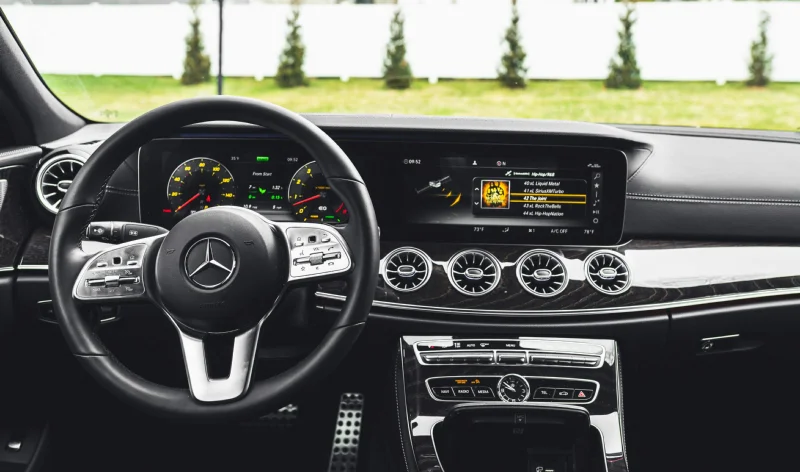
The future of driving is being rapidly transformed by a convergence of groundbreaking technologies and evolving consumer demands. The key trends shaping the automotive industry focus on Electrification, Autonomy, and Connectivity.
Here is an overview of the latest automobile technology and trends:
1. Electrification and Sustainability
The shift to electric vehicles (EVs) continues to be a dominant trend, driven by global emission standards and a push for sustainability.4
- Battery Technology Advancements: Focus is on increasing energy density for longer range, improving charging speeds (especially with fast-charging infrastructure), and developing more advanced technologies like solid-state batteries for enhanced safety and performance.5
- Diversified Powertrains: While Battery Electric Vehicles (BEVs) lead, there is continued development in Hybrid Electric Vehicles (HEVs), Plug-in Hybrid Electric Vehicles (PHEVs) as transitional options, and hydrogen Fuel Cell Vehicles (FCVs).6
- Eco-Friendly Manufacturing: Manufacturers are increasing their focus on using sustainable materials, implementing recycling initiatives for batteries, and committing to more carbon-neutral production practices.7
2. Autonomous Driving (Self-Driving Vehicles)
Autonomous Vehicle (AV) technology is moving from concept to real-world application, though challenges in regulation and public trust remain.8
- Levels of Autonomy: Deployment of vehicles with Level 2 (L2) and Level 3 (L3) autonomous features is becoming more common, allowing the car to handle more complex tasks under certain conditions.9 The industry is working toward greater scale deployment of Level 4 (L4) autonomy in defined areas for services like robotaxis
- Sensor Innovation: Critical components like LiDAR (Light Detection and Ranging), radar, and advanced camera systems are constantly improving to provide more accurate and reliable environment perception.11
- AI and Machine Learning (ML): These are central to AVs, enhancing algorithms for object detection, real-time decision-making, route optimization, and handling unpredictable traffic situations.
- Mobility-as-a-Service (MaaS): The rise of robotaxis and robobuses in geo-fenced urban areas (particularly in China and the US) is accelerating the commercialization of autonomy.
3. Connected and Software-Defined Vehicles (SDVs)
Cars are transforming into highly connected, software-centric devices on wheels.15
- 5G and V2X Communication: The integration of 5G connectivity provides ultra-fast data transfer and low latency, enabling Vehicle-to-Everything (V2X) communication.16 This allows cars to talk to other vehicles (V2V), infrastructure (V2I), and pedestrians (V2P), which is critical for improved traffic management and safety.17
- Software-Defined Architecture: The vehicle's functionality is increasingly determined by its software, allowing for Over-the-Air (OTA) updates for new features, bug fixes, and performance enhancements (similar to a smartphone).18
- Advanced Infotainment and User Experience: In-vehicle systems are becoming more personalized and intuitive, integrating features like:
- AI-powered virtual assistants for seamless control.19
- Augmented Reality (AR) in heads-up displays for navigation and information.20
- Customizable interfaces that learn driver habits and preferences.21
- Cybersecurity: As vehicles become more connected, robust cybersecurity measures, including encryption and intrusion detection systems, are essential to protect the vehicle's systems and data from external threats.22
4. Advanced Safety Features (ADAS)
Advanced Driver-Assistance Systems (ADAS) are continually evolving, moving toward proactive safety and support.
- Sensor Fusion: Combining data from multiple sensors (cameras, radar, LiDAR) for more reliable and accurate detection of surroundings.24
- Advanced Emergency Systems: Features like Autonomous Emergency Braking (AEB), Adaptive Cruise Control (ACC), and Lane-Keeping Assist (LKA) are becoming standard and more sophisticated, utilizing AI for improved decision-making.
In summary, the future of driving is electric, autonomous, and seamlessly connected, fundamentally changing not only how we drive but also how we interact with our vehicles and manage urban mobility.
Key Takeaways
- ■Advanced safety and driver-assistance features are becoming standard
- ■Electric and hybrid vehicles are driving the shift toward sustainability
- ■Connected car technology is enhancing convenience and real-time insights
- ■Automation and AI are redefining the future of personal transportation
related articles
- by brennan-montgomery
- December 23, 2025
Car Subscription Services: Are They Worth It Compared to Traditional Ownership?

- by declan fairchild
- December 22, 2025
Step-by-Step Guide to Preparing Your Car for a Long Road Trip

- by nathan reed
- December 19, 2025
What Your Dashboard Warning Lights Really Mean: A Driver’s Guide
- by sebastian rowe
- December 18, 2025